
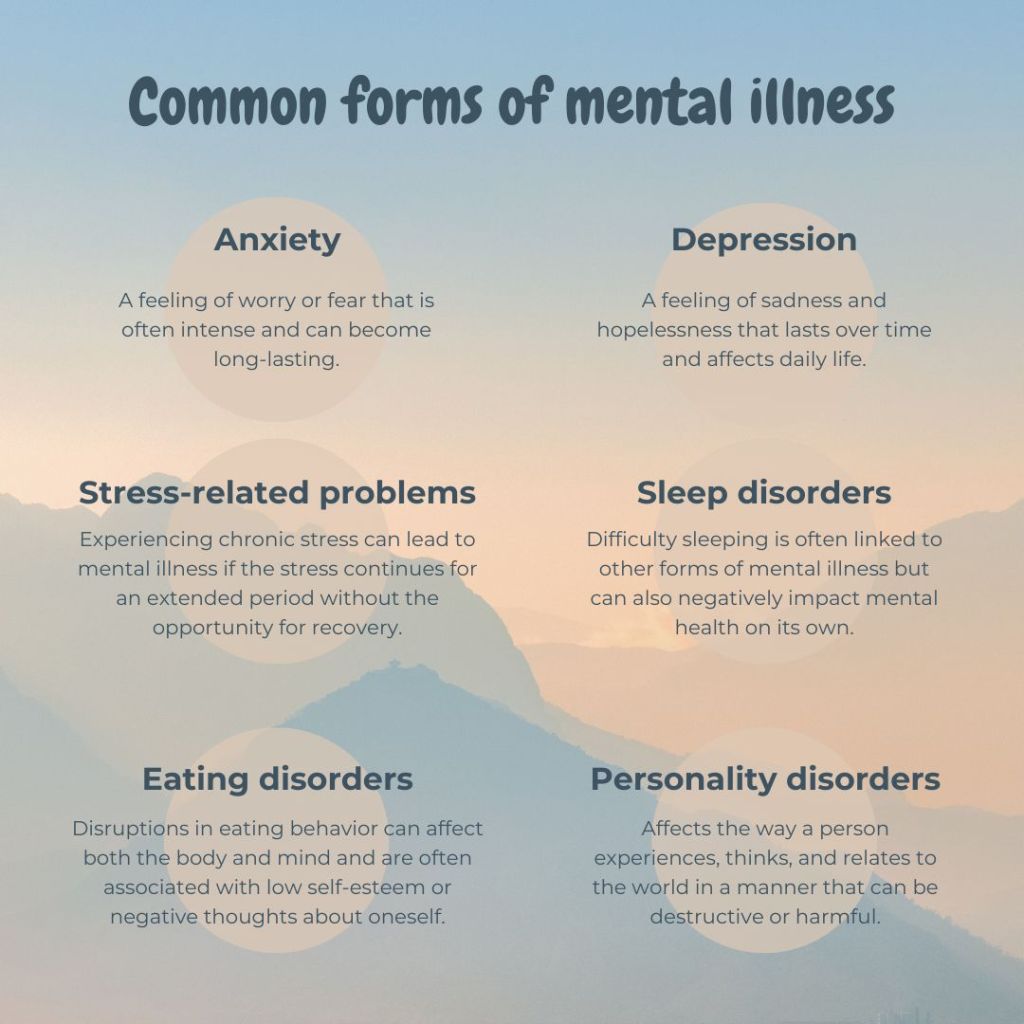
Mental illness is a collective term for a variety of conditions that affect our mental and emotional well-being. It can range from temporary feelings of anxiety and sadness to long-term mental disorders that require treatment. Mental illness is common and can affect anyone, regardless of age, gender, or background.
Causes of mental illness
Mental illness can have many different causes, and it is often a combination of factors that contribute to it. Some common causes include:
- Genetic factors: Heredity plays a role in many forms of mental illness.
- Environmental factors: Difficult life events, such as loss, trauma, or prolonged stress, can increase the risk.
- Social factors: Loneliness, bullying, and lack of social support can contribute to mental illness.
- Biological factors: The chemistry of the brain and hormonal imbalances also affect mental health.

What can you do to improve your mental health?
There are several ways to enhance your mental health:
- Conversation and support: Talking to someone—a friend, family member, or professional—can help articulate feelings and thoughts.
- Physical activity: Regular exercise is beneficial for both the body and mind.
- Regular routines: Maintaining consistent sleep, eating, and break schedules can provide a stable foundation for mental health.
- Mindfulness and relaxation: Techniques such as meditation, breathing exercises, or other relaxation methods can help reduce stress and anxiety.
- Set reasonable goals: Establishing small, achievable goals in daily life can create a sense of control and purpose.
It’s normal to feel bad sometimes
It’s perfectly normal to occasionally feel sad, anxious, or stressed—life has its ups and downs. However, if you feel down, sad, or anxious for an extended period, or if it starts to negatively impact your daily life, it’s important to seek help. Getting support from an outside source can be a first step towards feeling better and can provide insights that are difficult to reach on your own.
 Positivity Portal